‘Ridiculous’: Trump Burns $84,000 to Shame Black Leader as He Exits, Then Critics Dig Up What He Wrote
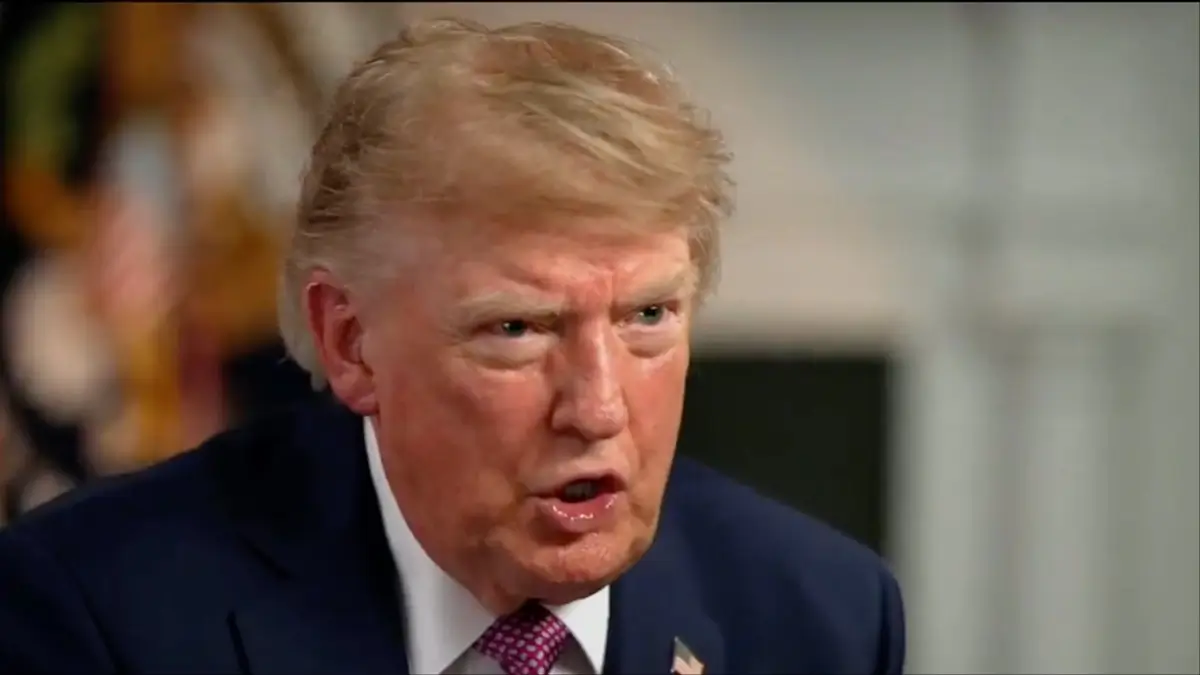
President Donald Trump is moving ahead with plans to install ideological signs outside the Smithsonian’s National Museum of American History as promised.
His critics say it’s an attempt to rewrite and whitewash the nation’s checkered history and to “publicly shame” the Black Secretary of the Smithsonian, Lonnie Bunch. Bunch announced his resignation last week.
Trump promised to install the signs in an executive order he inked in July. In the order, Trump claimed there’s “a revisionist movement” in the U.S. It “seeks to undermine the remarkable achievements of the United States by casting its founding principles and historical milestones in a negative light,” he claimed.
Interior Secretary Doug Burgum laid out the plans for the $84,000 worth of signs in letters he sent to two senators. Oregon Democrat Jeff Merkley and Alaska Republican Lisa Murkowski received them earlier this month.
Trump has long complained about exhibits at museums run by the independent Smithsonian Institution, accusing it of portraying American history in a bad light.
The Atlantic published details of one of the letters in an article published on Sept. 15.
“Donald Trump has not forgotten his midsummer promise to publicly shame the Smithsonian,” Kelsey Ables wrote in the story.
Ables obtained a copy of one of Burgum’s letters.
In it, the interior secretary wrote that visitors to the National Museum of American History should visit “with relevant information about the curators’ interpretation of history and stated goal of changing the viewpoint of visitors.”
Burgum accused the Smithsonian’s leaders of altering “the museum’s role from accurately and coherently telling America’s story to using the museum as a tool to advance personal, radical ideologies.”
The letter went on to say, “We believe the public should enter the museum fully equipped with information needed to evaluate whether to invest their time viewing these exhibits and programming.”
Museum director Anthea M. Hartig condemned the White House report in July that accused her of “radical activist ideology,” according to The New York Times. It also contended she has undermined “faith in American institutions.”
The letter bashed Smithsonian leader Bunch. Burgum said, “Visitors should be aware of Smithsonian Secretary Lonnie Bunch’s history of invidious discrimination and anti-white animus.”
That’s a reference there to an essay Bunch wrote in 2000 about racism within the nation’s museums. He described “the museum profession as ‘awash in whiteness,’” the Times reported.
Supporters point out that what Bunch wrote at the time was true: many of these institutions lacked diversity.
It’s unclear exactly when the signs will go up or what they will say.
A social media outcry followed, demanding Trump pay attention to issues that matter to struggling Americans.
“Can’t get health care, can’t afford education, save Social Security, can’t do infrastructure repair, can’t feed our military. But they can afford to put up signs saying President Pendejo doesn’t like real history. We are truly in the stupidest of timelines,” a Threads user proclaimed.
Another described the Trump administration’s focus on this as simply “Ridiculous.”
Others piled on. “Wasting our money yet again!”
This commenter said what plenty of people are thinking, “He’s such a stupid old man!”
Trump has bashed the Smithsonian and the National Museum of American History before. Last August, he wrote in a social media post that, “The Smithsonian is OUT OF CONTROL, where everything discussed is how horrible our Country is, how bad Slavery was, and how unaccomplished the downtrodden have been,” Mediaite reported.
Meanwhile, Bunch, the first African-American leader of the Smithsonian Institution, has spent the past 38 years with the museum network.
He worked at the National Air and Space Museum and the National Museum of Natural History. He was the founding director of the African American History and Culture Museum. Bunch has held the top job at the Smithsonian since 2019.
The Smithsonian Institution is the world’s largest museum, education, and research complex. It consists of 21 museums, the National Zoo, and numerous research centers.
Bunch retires at the end of the year.